
Reviewed by: RBKsilicone Engineering Team
Updated: July 2026
Reading Time: 12 Minutes
Compression Molding vs LSR Injection Molding: Which Silicone Manufacturing Process Is Right for Your Product?
Choosing the right silicone manufacturing process is one of the most important decisions when developing a custom silicone product. The molding method directly affects product quality, production efficiency, tooling cost, dimensional accuracy, appearance, and final application performance.
For silicone products, two of the most commonly used manufacturing technologies are compression molding and Liquid Silicone Rubber (LSR) injection molding.
Both processes can produce high-quality silicone components, but they are designed for different product requirements. Compression molding is widely used for many custom silicone parts due to its flexibility and cost efficiency, while LSR injection molding is preferred for high-precision products requiring complex designs and high-volume production.
In this guide, RBKsilicone explains the differences between compression molding and LSR injection molding, including their advantages, limitations, applications, costs, and how to select the best process for your project.
Table of Contents
- What Is Silicone Compression Molding?
- What Is LSR Injection Molding?
- Key Differences Between Compression and LSR Molding
- Compression Molding vs LSR Injection Molding Comparison
- How to Choose the Right Silicone Manufacturing Process
- Applications of Each Process
- Frequently Asked Questions
What Is Silicone Compression Molding?
Compression molding is one of the most widely used manufacturing methods for silicone rubber products. The process involves placing a measured amount of silicone material into a heated mold cavity, then applying pressure to shape and cure the product.
During production, silicone material is positioned manually or automatically into the mold. Heat and pressure activate the curing process, allowing the silicone to form the desired shape.
How Compression Molding Works
- Silicone material preparation
- Material weighing and cutting
- Material placement into mold cavity
- Heat and pressure curing
- Product removal and trimming
- Quality inspection
Compression molding is suitable for a wide range of silicone products, especially products requiring different sizes, hardness levels, colors, and custom designs.
Advantages of Compression Molding
- Lower tooling investment
- Suitable for small and medium production volumes
- Flexible material selection
- Suitable for large silicone parts
- Excellent mechanical properties
- Ideal for custom silicone products
Common Compression Molded Silicone Products
- Silicone gaskets
- Silicone seals
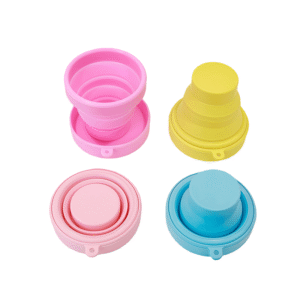
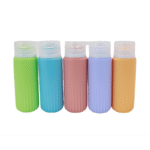
- Silicone kitchenware
- Silicone baby products
- Industrial silicone parts
- Rubber silicone components
What Is LSR Injection Molding?
Liquid Silicone Rubber (LSR) injection molding is an advanced automated manufacturing process designed for producing high-precision silicone products.
Unlike traditional solid silicone molding, LSR uses two-component liquid silicone materials that are automatically mixed and injected into a heated mold under controlled conditions.
How LSR Injection Molding Works
- Liquid silicone components are prepared
- Materials are automatically mixed
- Liquid silicone is injected into precision molds
- Controlled curing takes place inside the mold
- Automatic demolding and inspection
Advantages of LSR Injection Molding
- High production efficiency
- Excellent dimensional accuracy
- Suitable for complex designs
- Reduced manual operation
- Consistent product quality
- Suitable for high-volume production
Key Differences Between Compression Molding and LSR Injection Molding
Although both compression molding and LSR injection molding are used to manufacture silicone products, they have significant differences in material handling, production methods, equipment requirements, tooling costs, and ideal applications.
Understanding these differences helps product developers and purchasing teams select the most suitable manufacturing solution for their specific requirements.
1. Material Type
Compression Molding:
Compression molding mainly uses solid silicone rubber materials such as HTV (High Temperature Vulcanizing) silicone. The material can be customized with different hardness levels, colors, and performance characteristics.
LSR Injection Molding:
LSR uses two-component liquid silicone rubber materials. The material is automatically mixed and injected, making it suitable for highly automated production.
2. Production Efficiency
Compression Molding:
Compression molding requires more manual operations, including material preparation, loading, trimming, and inspection. It is highly flexible for customized products and different production requirements.
LSR Injection Molding:
LSR injection molding provides a higher level of automation with faster cycle times and consistent production quality, making it ideal for large-volume manufacturing.
3. Product Complexity
Compression Molding:
Suitable for many standard and customized silicone products, especially products with simple to medium complexity.
LSR Injection Molding:
Better suited for products with complex structures, thin walls, precise dimensions, and demanding appearance requirements.
4. Tooling Cost
Compression Molding:
Generally requires lower tooling investment, making it a cost-effective option for prototypes, small batches, and medium-volume production.
LSR Injection Molding:
Requires more advanced molds and equipment, resulting in higher initial investment but improved efficiency for long-term mass production.
Compression Molding vs LSR Injection Molding Comparison Table
Item
Compression Molding
LSR Injection Molding
Material
Solid Silicone Rubber (HTV)
Liquid Silicone Rubber (LSR)
Production Method
Compression & Heat Curing
Automatic Injection & Curing
Automation Level
Medium
High
Tooling Cost
Lower Initial Cost
Higher Initial Cost
Production Volume
Small to Medium Volume
Medium to High Volume
Precision
Good
Excellent
Complex Designs
Suitable for Standard Designs
Suitable for Complex Designs
Common Applications
Gaskets, Seals, Kitchenware, Industrial Parts
Medical Parts, Baby Products, Precision Components
How to Choose the Right Silicone Manufacturing Process?
The best manufacturing process depends on your product design, quantity requirements, performance expectations, and budget.
Choose Compression Molding When:
You need customized silicone products
Your production volume is small or medium
You require flexible material options
Your product design is relatively simple
You want lower tooling investment
Choose LSR Injection Molding When:
You require high-volume production
Your product requires high precision
You need complex geometries
You require consistent automated production
Your application requires medical or baby-grade silicone
Applications of Compression Molding
Compression molding remains one of the most widely used silicone manufacturing processes because of its flexibility and cost efficiency.
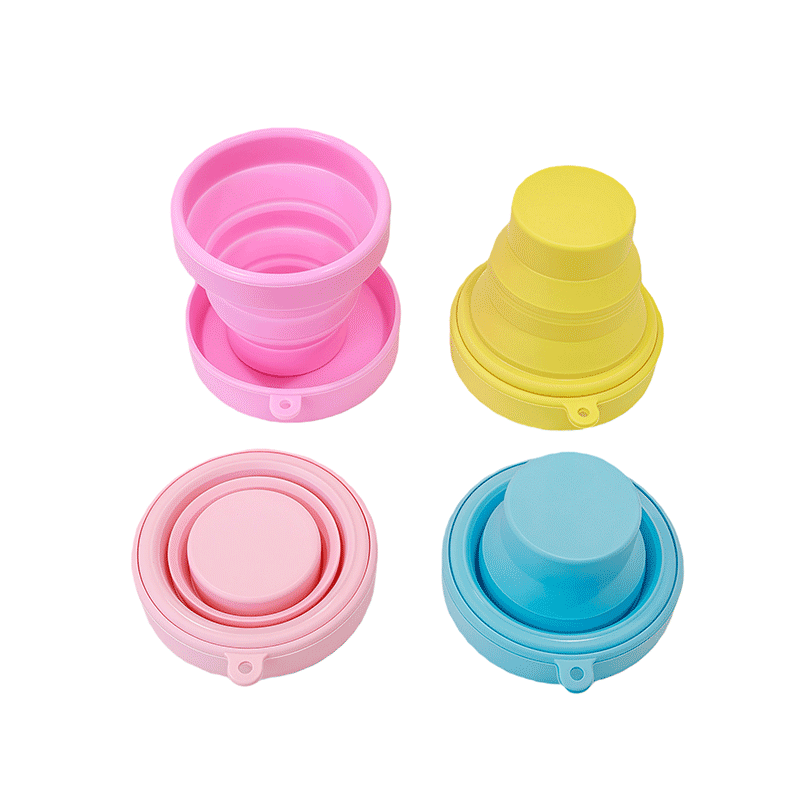
Silicone kitchenware
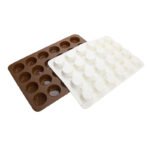
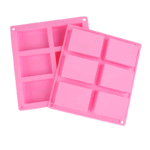
Silicone baking molds
Silicone baby products
Silicone gaskets
Silicone seals
Industrial silicone components
Automotive silicone parts
Applications of LSR Injection Molding
LSR injection molding is commonly used where precision, cleanliness, and consistent performance are critical.
Medical silicone components
Baby care products
Electronic silicone parts
Precision seals
Wearable silicone products
High-volume consumer products
Why Choose RBKsilicone for Custom Silicone Manufacturing?
Choosing the right manufacturing partner is just as important as selecting the right molding process. A professional silicone manufacturer can help you optimize product design, select suitable materials, reduce development risks, and ensure stable mass production.
RBKsilicone provides complete silicone manufacturing solutions for global brands, wholesalers, distributors, and industrial customers.
Complete OEM & ODM Support
From initial product concepts to final production, our engineering team supports customers throughout the entire development process.
Product design consultation
Prototype development
Mold design and manufacturing
Material selection
Mass production
Quality inspection
Customized packaging
Advanced Silicone Manufacturing Capabilities
RBKsilicone offers multiple manufacturing processes to meet different product requirements:
Manufacturing Process
Main Applications
Compression Molding
Kitchenware, seals, gaskets, industrial silicone parts
LSR Injection Molding
Medical parts, baby products, precision components
Silicone Extrusion
Tubing, profiles, continuous silicone products
Overmolding
Silicone bonded with plastic or metal components
Quality Control Throughout Production
At RBKsilicone, quality control is integrated into every stage of manufacturing, from incoming material inspection to final shipment inspection.
Raw material inspection
Mold accuracy verification
Production process monitoring
Product appearance inspection
Dimensional measurement
Final quality inspection
Frequently Asked Questions
Is compression molding cheaper than LSR injection molding?
Compression molding usually requires lower tooling investment and is often more suitable for customized products or small to medium production volumes. LSR injection molding requires higher initial investment but provides better efficiency for large-scale production.
Which silicone molding process is better for custom products?
The best process depends on product design, quantity, performance requirements, and budget. Compression molding is suitable for many customized silicone products, while LSR injection molding is ideal for high-precision and high-volume applications.
Can RBKsilicone manufacture products from drawings or samples?
Yes. RBKsilicone supports OEM and ODM projects based on 2D drawings, 3D files, samples, or product concepts. Our engineering team can help develop the most suitable manufacturing solution.
What silicone materials can you provide?
We provide various silicone material options, including food-grade silicone, medical-grade silicone, and industrial silicone, with customized hardness, color, and performance requirements.
Do you provide samples before mass production?
Yes. We provide prototypes and pre-production samples for customer approval before mass production to ensure the product meets design, quality, and performance requirements.
What industries do you serve?
RBKsilicone serves customers in kitchenware, baby products, medical components, industrial parts, electronics, automotive, pet products, and other silicone application fields.
Related Articles
What Is Food Grade Silicone?
FDA vs LFGB Silicone: What’s the Difference?
How Silicone Products Are Manufactured
How to Choose a Reliable Silicone Manufacturer
Need a Custom Silicone Manufacturing Partner?
RBKsilicone provides professional OEM & ODM silicone manufacturing services, including compression molding, LSR injection molding, extrusion, and custom silicone solutions.
Contact RBKsilicone for Your Project