
Reviewed by: RBKsilicone Engineering Team
Updated: July 2026
Reading Time: 11 Minutes
How to Choose the Right Silicone Hardness (Shore A): A Practical Guide for Product Designers
Silicone rubber is available in a wide range of hardness levels, allowing engineers to balance flexibility, durability, sealing performance, and user comfort. Choosing the correct Shore A hardness is one of the most important decisions when developing a custom silicone product.
A material that is too soft may deform easily or wear prematurely, while one that is too hard may reduce sealing performance, comfort, or elasticity. Understanding how Shore A hardness affects product performance helps ensure your design meets both functional and manufacturing requirements.
This guide explains what Shore A hardness is, how it is measured, and how to select the appropriate hardness for different silicone applications.
Table of Contents
- What Is Shore A Hardness?
- How Silicone Hardness Is Measured
- Common Silicone Hardness Ranges
- Recommended Hardness by Application
- How to Choose the Right Hardness
- Can Silicone Hardness Be Customized?
- Frequently Asked Questions
What Is Shore A Hardness?
Shore A hardness is the industry standard used to measure the softness or firmness of flexible rubber materials, including silicone. It is determined using a Shore A durometer, which measures the material’s resistance to indentation.
A lower Shore A value indicates a softer, more flexible material, while a higher value indicates a firmer and more rigid silicone.
Typical Shore A Scale
| Shore A | Material Feel | Typical Uses |
|---|---|---|
| 10A–20A | Very Soft | Medical cushions, soft grips, wearable products |
| 30A–40A | Soft | Baby products, flexible seals, soft consumer products |
| 50A–60A | Medium | General-purpose silicone products |
| 70A–80A | Firm | Industrial seals, mechanical components |
How Silicone Hardness Is Measured
Hardness testing is typically performed after curing using a calibrated Shore A durometer. The instrument applies a standardized force to the silicone surface, and the measured resistance is displayed as a Shore A value.
To ensure accurate results, measurements should be taken on a flat surface under controlled environmental conditions. Multiple readings are usually averaged to minimize measurement variation.
Factors That Influence Hardness
- Silicone formulation
- Filler content
- Curing process
- Post-curing conditions
- Operating temperature
- Product wall thickness
Common Silicone Hardness Ranges
Different hardness levels provide different performance characteristics. Selecting the appropriate Shore A value depends on the product’s function, mechanical requirements, and user experience.
| Hardness | Characteristics | Typical Products |
|---|---|---|
| 10A–20A | Ultra soft, highly flexible | Medical cushions, wearable devices, protective covers |
| 30A | Soft and comfortable | Baby products, grips, soft seals |
| 40A | Good flexibility with improved durability | Kitchenware, phone accessories, household products |
| 50A | Balanced flexibility and strength | General molded silicone products |
| 60A | Higher wear resistance | Industrial components, vibration pads |
| 70A | Firm with excellent dimensional stability | Mechanical seals, automotive parts |
| 80A | Very firm | Heavy-duty industrial applications |
Recommended Hardness for Different Applications
While every project has unique requirements, the following recommendations provide a useful starting point for selecting silicone hardness.
| Application | Recommended Hardness |
|---|---|
| Baby Products | 20A–40A |
| Kitchenware | 40A–60A |
| Medical Components | 20A–50A |
| Silicone Keypads | 30A–60A |
| Industrial Gaskets | 50A–70A |
| Mechanical Seals | 60A–80A |
| Silicone Tubing | 40A–70A |
These values are general guidelines. Material formulation, operating environment, and product geometry should also be considered during material selection.
How to Choose the Right Silicone Hardness
Selecting the correct hardness requires balancing product performance, durability, manufacturability, and user experience. Instead of choosing the hardest or softest material available, designers should evaluate the actual working conditions of the product.
Consider These Factors
- Compression and sealing performance
- Flexibility and user comfort
- Tensile and tear strength requirements
- Operating temperature range
- Chemical exposure
- Product wall thickness
- Expected service life
- Manufacturing process (Compression, LSR, Extrusion)
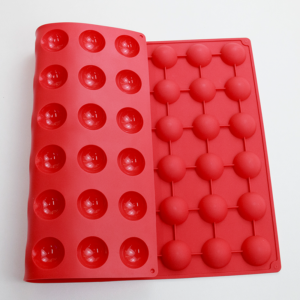
For example, a food-grade baking mold typically benefits from a medium hardness that balances flexibility with shape retention, while an industrial gasket often requires a firmer material to withstand continuous compression and mechanical stress.
Can Silicone Hardness Be Customized?
Yes. One of the major advantages of silicone rubber is that its hardness can be customized to meet specific application requirements. By adjusting the formulation, manufacturers can produce materials with different Shore A values while maintaining excellent performance.
At RBKsilicone, we help customers select the most suitable hardness based on the product’s function, operating environment, manufacturing process, and regulatory requirements.
Custom Material Options
- Custom Shore A hardness from 10A to 80A
- Food-grade silicone materials
- Medical-grade silicone compounds
- High-temperature resistant silicone
- Flame-retardant silicone
- Conductive silicone
- Custom colors and transparency
- Special mechanical property formulations
Material recommendations are typically confirmed during prototype development to ensure the finished product meets both functional and production requirements before mass manufacturing begins.
Why Choose RBKsilicone?
Selecting the right silicone hardness is only one part of successful product development. An experienced manufacturing partner can help optimize material selection, product design, tooling, and production processes to improve both quality and cost efficiency.
Our Advantages
- Professional OEM & ODM silicone manufacturing
- Compression molding, LSR injection molding, and extrusion capabilities
- Custom silicone formulations for different applications
- Support for prototypes and mass production
- Strict quality inspection throughout production
- Fast engineering response and technical support
- Global export experience
Frequently Asked Questions
What Shore A hardness is best for food-grade silicone?
Most food-grade silicone products use materials between 40A and 60A, providing a good balance of flexibility, durability, and ease of use. The optimal hardness depends on the product’s intended application.
Can silicone hardness be customized?
Yes. Silicone compounds can be formulated in a wide range of Shore A hardness values to meet specific design and performance requirements.
Does higher Shore A mean better quality?
No. A higher Shore A value simply indicates a firmer material. The best hardness is the one that matches your product’s functional requirements rather than the highest available value.
How is silicone hardness tested?
Silicone hardness is measured using a calibrated Shore A durometer after the material has fully cured. Multiple measurements are usually taken to ensure consistent results.
Can hardness affect manufacturing methods?
Yes. Different hardness levels may influence mold filling, demolding, cycle time, and overall product performance. Material selection should always be considered together with the manufacturing process.
Related Articles
- What Is Food Grade Silicone?
- Compression Molding vs. LSR Injection Molding
- How Silicone Products Are Manufactured
- How to Choose a Reliable Silicone Manufacturer
Need Help Selecting the Right Silicone Material?
Whether you’re developing a consumer product, industrial component, or medical application, RBKsilicone can recommend the ideal silicone hardness and manufacturing process for your project.